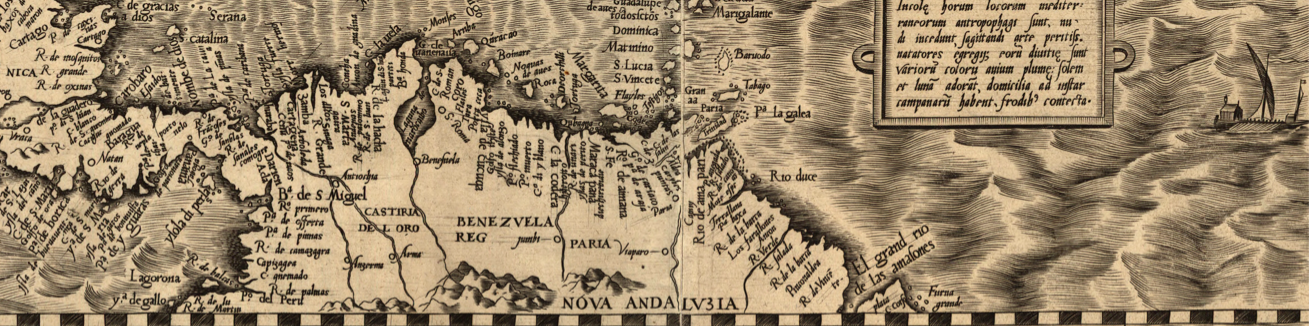
After its discovery by Alonso de Ojeda, Aruba became a formal part of the Spanish Empire. While the island did not receive much attention from the Spanish crown, it played an interesting and strategic role in the region. With Coro (modern-day Venezuela) established as a major city and capital of the New World, Aruba saw some activity due to its proximity. However, to fully understand Aruba’s significance during this time, we need to take a broader view of the historical context.
Spanish Rule Over Aruba: A Timeline of Monarchs
From 1499 onward, Aruba was under the rule of several Spanish monarchs, starting with the House of Trastámara:
- 1499 – 1504: Queen Isabella of Castile and King Ferdinand of Aragon, known for financing Columbus’ expeditions.
- 1504 – 1555: Queen Juana (often called Juana la Loca).
Following this period, the Spanish throne passed to the House of Habsburg, a powerful dynasty that expanded Spain’s influence through strategic marriages. As of 1556, the Spanish King also held titles over:
- Burgundy
- The Netherlands (including modern-day Belgium)
- Germany
- Austria
- Rome
- Naples (Southern Italy)
- And, of course, all Spanish territories in the Americas, including Aruba.
One of the most significant rulers of this period was King Philip II, who reigned from 1556 to 1598. His reign is particularly important for Aruba because the Dutch Protestant Rebellion, which he fought against, would eventually have a profound impact on the island.

King Philip II
The Welser Family’s Control Over Venezuela (1528 – 1546)
Before jumping too far ahead, let’s revisit the events in Coro between 1528 and 1546. During this time, the Spanish crown, heavily indebted due to wars in Europe, transferred control of Venezuela to the Welser family, a powerful German banking dynasty, in exchange for their financial support. From 1528 to 1546, the Welsers governed Venezuela, although their rule didn’t directly affect Aruba in any notable way.
However, this shift in power marked the end of key agreements between the Spaniards and local indigenous leaders. Juan de Ampiés, Cacique Manaure, and Father Bartolomé de las Casas had brokered arrangements that provided some protections for the indigenous population. With the Welsers in control, these agreements fell apart, forcing the indigenous people to fight once again for their rights and survival.
But let’s not jump too far ahead, and go back to Coro around 1528 – 1546. Due to the many wars in Europe the Spanish crown under owed a debt to the German banking family of the Welsers. In exchange for this debt, they got to rule what is now Venezuela from 1528 – 1546. Although their presence did not produce any remarkable activities for Aruba, it did end the agreements between the Spaniards and the local indigenous people. These were agreements made between Juan de Ampies, Cacique Manaure and Father De las Casas. The local indigenous population had to fight again to defend themselves and their right to be there.
Aruba’s Strategic Role in Defending the Coast
Aruba, relatively safe due to its location, played a part in defending the northern coast of Coro from invasions and pirate attacks. In fact, the people of Aruba were actively involved in regional defense efforts, even founding a village northeast of Coro called Carrizal to help protect the area.
The Founding of Carrizal by the People of Aruba: A Historical Mystery
In the Cathedral of Coro (located in modern-day Venezuela), there is a historic document that expresses gratitude to the people of Aruba for founding the village of Carrizal (not to be confused with the present-day municipality of Carrizal in Venezuela). However, the exact circumstances surrounding this event remain somewhat unclear.
It is uncertain whether the Arubans founded Carrizal proactively as a defense against pirate attacks, or if they fled to the mainland to escape these threats. Additionally, the timeline of these events is debated. Some sources suggest that the village was established in the late 16th century, while other documents indicate it may have been around 1723.
Unfortunately, I could not find any visual records to confirm the exact timeline. However, there is a Dutch documentary that discusses this event and even shows the document at minute 6:27. You can also see the church, built around 1750, that still stands today as a testament to this chapter in history.

Key Takeaways from Aruba’s Early Colonial History:
- Part of a Global Empire: Aruba was once part of the Spanish Empire, the largest empire in the world during that time, which extended across Europe and the Americas.
- Brief German Rule: For a period, Aruba and the surrounding region were managed by the German Welser family, who controlled Venezuela as repayment for debts owed by the Spanish crown.
- Lack of Economic Value: Aruba was considered of little economic importance to the Spanish Empire, as the island lacked the gold or other valuable resources that could bolster the royal treasury.
- Predominantly Caiquetio Population: Throughout this time, the local population remained largely Caiquetio, with some Spanish settlers coexisting with the native people.
- Pirate Raids: The most notable events during this era were the occasional pirate raids, sometimes carried out by famous pirates, adding a layer of excitement to an otherwise quiet colonial existence.
(The map used as featured image on top can is made by Diego Gutierrez and Hieronymus Cock in 1562 and can be found here)


