The last indigenous settlements on Aruba in the 16th Century (late 1500’s)

Before the Dutch came to town, as discussed earlier, some Caquetío were sent back to Aruba from Santo Domingo. This triggered a new immigration wave from the mainland Caquetíos. Predominantly from Paraguaná and La Guajira. In the first article of this blog I indicated not to spend too much time to the pre-columbian period on Aruba. This part however is important for us to understand how the population of the post-columbian period has developed over time.

Recapping, the original inhabitants of Aruba have been sent to Santo Domingo as slaves.  Leaving the island pretty much desolate. Later they have been “pardoned” and “freed” by the Spanish King and Catholic church. Upon their return to Aruba, some Spanish have also settled on Aruba together with them, we are talking about a dozen or so. Therefore, starting in the 16th century the population was a mix of original Caquetíos, mainland Caquetíos and Spaniards. In my opinion this is what constitutes the last original inhabitants of Aruba before Dutch settlement in the 17th century and colonisation later in the 18th century. This was all when Juan de Ampiés was managing the islands as encomendero.

Before European contact, the areas on Aruba that have been inhabited and showed signs of villages were (locations we now know as):

  • Tanki Flip
  • Santa Cruz
  • Savaneta

There were other locations, but these three represent the most important ones.

In the 16th century, when the Caquetíos returned to Aruba, all literature I found, indicated that they were spread around Aruba in what we now know as:

  • Spanish Lagoon
  • Piedra Plat
  • Noord (Tanki Flip)
  • Santa Cruz
  • Savaneta

Because many of the new ones came from the mainland, they were accustomed to  Spanish presence. Especially the clergy (remember, the Catholic inhabitants of Aruba fell under the Bishopric/church based in Coro, founded by Juan de Ampiés).  Gonzalo de Angulo, the Bishop of Coro, ordered for a census of the ABC Islands in 1619. The Priest Martín Gomez reported that only a few hundred Caquetíos lived on Aruba.

Mind you, even though the Caquetíos have been “pardoned” and “free”, they still were obliged to work for the Spanish. Albeit upon availability, in practice they were often forced and could still be considered slaves. Juan de Ampiés himself had a history of being an “indiero”, a hunter of indigenous people as slaves.

Unfortunately we do not know much about the people living on Aruba in this period. What we do know, in broad terms, is discussed in some of my previous blog posts. It remains a challenge to me to really construct a detailed timeline of the population and social developments of Aruba before the arrival of the Dutch.

It was not until the 17th century that many important events took place that influenced the development of Aruba. It can be considered the start of Aruba’s first mayor social and population developments. One can look at these as positive, negative or a combination. For me, it is what happened, and without judging I want to understand this. It can help in discovering more about Aruba, my heritage and why things are why they are now.

Main take away here is

  • Very little to nothing of the original inhabitants of Aruba remained
    • therefore the current population is a result of approximately only 400 years of developments
  • No mayor developments occurred on Aruba untill the 16th century
  • For the Caquetíos on Aruba, it remained a hard life throughout history


An interesting blog, going a bit more into detail:

http://dutchcaribbeanroots.blogspot.com/2018/05/myth-or-real-amerindians-in-curacao.html

Aruba and the region in the 18th century

The Impact of the 1700’s on Aruba’s Development

Aruba may be a small island in the Caribbean, but it’s part of a much larger story that began when Christopher Columbus stumbled upon these parts of the world. Today, approximately 87% of Aruba’s economy depends on tourism. A key component of modern tourism marketing is storytelling, driven by a growing demand for authentic experiences from tourists, visitors, and travelers. But it’s not just visitors seeking authenticity—locals are also searching for a deeper connection to their identity, which is often rooted in Aruba’s rich history and cultural heritage.

As a result, many stories have emerged about Aruba’s culture, history, and what makes the island unique compared to the rest of the world. While most of these narratives are based in truth, they often lack depth and cover vast periods in a simplified manner. In my view, this leads to a somewhat distorted understanding of our history and roots. That’s why I started this blog—to dive deeper into the true origins of modern-day Aruba.

Now, after six chapters, we’re getting into the real heart of Aruba’s story.

As covered in previous chapters, one of the main points is that Aruba played a relatively minor role in the grand history of the Caribbean—but that depends on perspective. For the indigenous Arawak and Caiquetios, who came from present-day Venezuela and Colombia, Aruba was incredibly significant. It offered them refuge, allowing them to live free from religious persecution. For the Dutch, who arrived later, the nearby island of Curaçao held more importance due to its strategic position in the Caribbean and the Americas. However, Aruba was essential for them to maintain control over both Curaçao and Bonaire, as well as the trade routes the Spanish used to ship wealth back to Spain.

From 1499 to the late 1600s, Aruba’s social and cultural development was fairly straightforward. Neither the Spanish nor the Dutch allowed European colonization on the island, so the population mainly consisted of the Arawak people, who had converted to Roman Catholicism. Despite this religious shift, they didn’t fully assimilate into European culture.

Aruba’s first major shift came under the control of the Dutch West India Company (WIC) around 1639. When the first iteration of the WIC went bankrupt, a second was founded in September 1674, continuing Aruba’s journey under Dutch influence. It’s important to note, however, that Aruba was not yet officially part of the country we now know as the Netherlands.

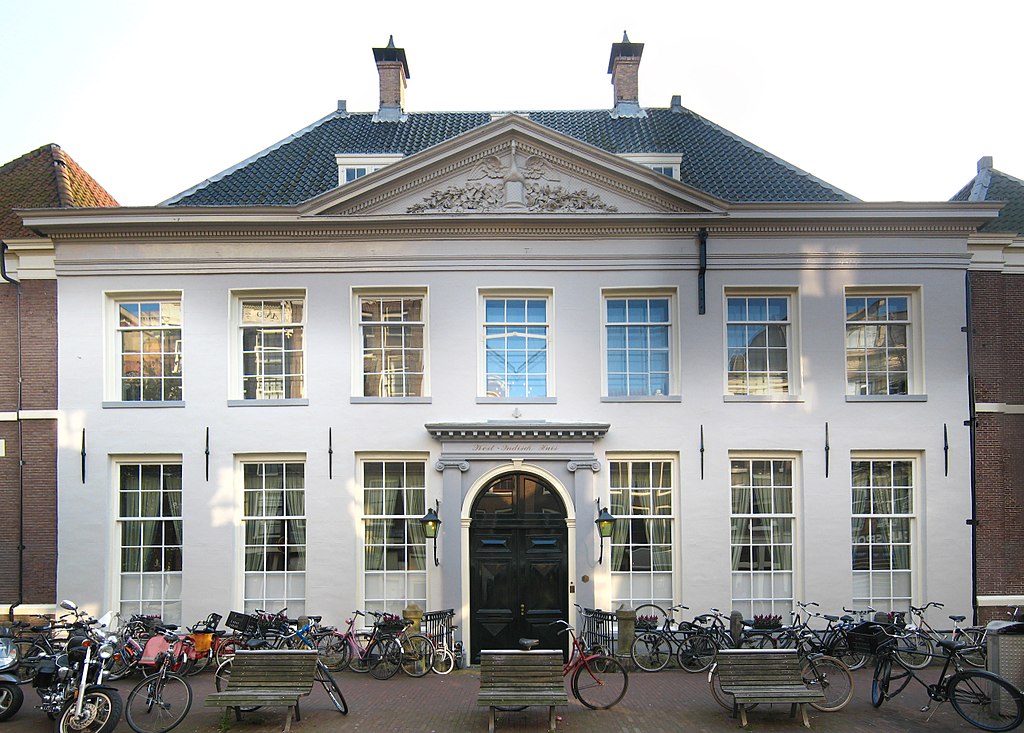
West-Indisch_Huis Amsterdam
WIC headquarters in Amsterdam. Aruba fell under its rule.

So, what shaped Aruba into the diverse melting pot of nationalities, cultures, religions, and traditions that it is today? Why is the standard of living on the island relatively high compared to the rest of the region? Has it always been this way? My research reveals that Aruba has endured its fair share of challenges, including famine, poverty, and economic stagnation. Yet, I believe that the people who lived and worked on Aruba from the late 1600s onward laid the foundation for what we now recognize as the true roots of modern Aruba.

In the upcoming chapters, I’ll dive deep into the period between 1639 and 1791, when Aruba was under the control of the Dutch West India Company (WIC). This era played a crucial role in shaping the island, and it wasn’t until December 31, 1791, that Aruba officially became a colony of “The Netherlands.” There’s much more to uncover about this significant period in Aruba’s history.

Aruba Arawak

Aruba’s first encounter with Europeans in 1499

Without a doubt, the first inhabitants of Aruba were the Caiquetio Indians, part of the Arawak tribe who migrated from the mainland and settled on the island. Archaeological excavations have shown that the Caiquetios have lived on Aruba for around 16,000 years, with major settlements in what we now know as Tanki Flip & Malmok (Noord), Santa Cruz, Canashito and Savaneta.

aruba-political-map

However, as I mentioned in the introduction, my main focus is on Aruba’s history starting in 1499, when everything changed with the arrival of Europeans. The world was transformed after Columbus’ discovery of the Americas, and Aruba was no exception.

Aruba’s first European visitor was a Spaniard named Alonso de Ojeda (1466 Cuenca, Spain – 1515 Santo Domingo, Dominican Republic). Ojeda, a participant in Columbus’ second voyage, later embarked on a separate mission sponsored by Bishop Juan Rodríguez de Fonseca. During this expedition, he explored the coastlines of modern-day Venezuela and Colombia, and in September 1499, he landed on Aruba. Despite this discovery, Ojeda found no gold and labeled Aruba, along with Curaçao and Bonaire, as “Isla Inútil”—Spanish for “worthless island.”

Image of Spanish Conquistador Alonso de Ojeda
              Alonso de Ojeda

Alonso de Ojeda was an interesting character. He embodied, the good, the bad and the ugly of early European exploration in the Americas. But for the continuing history discussed on this site, after the discovery, his relevance diminished. The question I have is: “what happened to Aruba after 1499?”

Aruba automatically became part of the Spanish Empire and was included in the region known as Nueva Andalucía, governed by Ojeda. However, by 1513, the indigenous Caiquetios were enslaved and deported to Hispaniola (modern-day Dominican Republic) to work in copper mines, under the orders of Diego de Salazar. Around 2,000 Caiquetios from Aruba, Bonaire, and Curaçao were taken, leaving Aruba devoid of human inhabitants for nearly six years. Imagine how that must have been.

In 1519, the surviving Caiquetios were allowed to return to Aruba, thanks to Juan Martínez de Ampiés, a Spanish official who recognized the intelligence of the Caiquetios, referring to them as “Guatiaos”. He successfully advocated for their protection from slavery in exchange for their conversion to Christianity. Juan Ampiés, or possibly his son (there’s some historical debate), played a key role in the re-population of Aruba, Bonaire, and Curaçao, and later founded the city of Santa Ana de Coro in Venezuela in 1527 with the help of Cacique Manaure. This city played a key role in the re-population of the Islands, especially Aruba.

Unfortunately, Juan Ampiés eventually lost control of the region due to financial difficulties and disputes. King Charles I of Spain (Charles V of Germany) granted control of Venezuela’s coastal area to the Welser family—German bankers who had financed the Spanish Crown. Juan Ampiés died a poor man in 1533, and although the islands remained under Spanish control, they were largely forgotten, allowing the local Caiquetio population to live with a degree of autonomy.

Juan Ampiés’ influence was significant in shaping the post-1499 history of Aruba. He ensured that the island was re-populated with both the original Caiquetios and new arrivals from the mainland, while also introducing European agricultural practices such as the breeding of goats, pigs, and horses, as well as the cultivation of fruit trees.

Key Takeaways About Aruba’s Roots:

  1. Caiquetio heritage: Aruba’s indigenous roots trace back more than 16,000 years to the Caiquetios.
  2. Spanish colonization: Aruba was colonized by Spain and annexed into Nueva Andalucía.
  3. Enslavement and deportation: In 1513, the Caiquetio population was deported to the Dominican Republic, but later freed and allowed to return.
  4. Cultural exchange: After their return, the Caiquetios were encouraged to convert to Christianity and integrate European agricultural practices, forming the foundation of Aruba’s Catholic heritage.
  5. Mix of populations: By 1499, Aruba’s population had become a mix of original Caiquetio inhabitants, mainland indigenous people (from Santa Ana de Coro), and Spaniards.
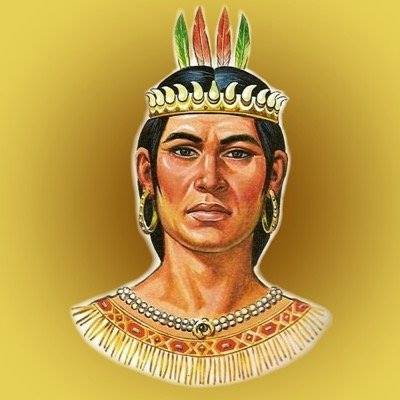
Manaure
Manaure
Ampies
Juan de Ampies


One of my primary conclusions from this chapter, based on extensive research, is that from 1499 onward, Aruba’s population became a blend of Caiquetio natives, indigenous people from the mainland, and Spanish settlers. This also explains the strong Catholic presence in Aruba today. Given the relatively short distance between Aruba and Venezuela (126 km), this cultural exchange makes perfect sense.

In the next chapter, I’ll explore the period from 1533 to around 1600, investigating the events and contributions that further shaped Aruba’s roots.

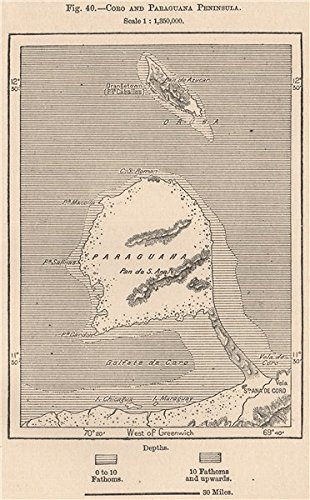
Paraguana
Coro and Paraguana Peninsula 1885

To confirm the above, check out a.o:

A Short History of the Netherlands Antilles and Surinam; By Cornelis C. Goslinga

Note: The Kingdom of the Netherlands did not yet exist during this period. The Dutch provinces of Holland, Friesland, Zeeland, and Utrecht were involved in the Eighty Years’ War against Spain.

Welcome to My Journey Through the True History of Aruba

Thank you for joining me on this exciting adventure! Combining my passions for history, exploration, and discovery, I invite you to uncover the “real” history of a small but fascinating island: Aruba.

Aruba is a small Island in the southern region of the Caribbean, less than 40 km north of the coast of Venezuela. Home to the local Arawak tribes, discovered by the Spaniards and now part of the Dutch Kingdom. Its location and Dutch Colonial past is what sets it apart from the traditional Spanish, British and French Caribbean history.

The upcoming chapters are based on carefully researched information from various sources, including history books, websites, documentaries, and any credible materials I can find. My goal is to provide an honest, in-depth look into what truly happened in Aruba’s past—beyond the typical stories you’ve heard.

As I continue my research, I’ll be updating these chapters with newly discovered facts and insights. So be sure to check back often to stay updated on this evolving journey through Aruba’s rich history!

fullsizeoutput_2cca