Thank you for joining me on this exciting adventure! Combining my passions for history, exploration, and discovery, I invite you to uncover the “real” history of a small but fascinating island: Aruba.
Aruba is a small Island in the southern region of the Caribbean, less than 40 km north of the coast of Venezuela. Home to the local Arawak tribes, discovered by the Spaniards and now part of the Dutch Kingdom. Its location and Dutch Colonial past is what sets it apart from the traditional Spanish, British and French Caribbean history.
The upcoming chapters are based on carefully researched information from various sources, including history books, websites, documentaries, and any credible materials I can find. My goal is to provide an honest, in-depth look into what truly happened in Aruba’s past—beyond the typical stories you’ve heard.
As I continue my research, I’ll be updating these chapters with newly discovered facts and insights. So be sure to check back often to stay updated on this evolving journey through Aruba’s rich history!
Before the Dutch came to town, as discussed earlier, some Caquetío were sent back to Aruba from Santo Domingo. This triggered a new immigration wave from the mainland Caquetíos. Predominantly from Paraguaná and La Guajira. In the first article of this blog I indicated not to spend too much time to the pre-columbian period on Aruba. This part however is important for us to understand how the population of the post-columbian period has developed over time.
Recapping, the original inhabitants of Aruba have been sent to Santo Domingo as slaves. Leaving the island pretty much desolate. Later they have been “pardoned” and “freed” by the Spanish King and Catholic church. Upon their return to Aruba, some Spanish have also settled on Aruba together with them, we are talking about a dozen or so. Therefore, starting in the 16th century the population was a mix of original Caquetíos, mainland Caquetíos and Spaniards. In my opinion this is what constitutes the last original inhabitants of Aruba before Dutch settlement in the 17th century and colonisation later in the 18th century. This was all when Juan de Ampiés was managing the islands as encomendero.
Before European contact, the areas on Aruba that have been inhabited and showed signs of villages were (locations we now know as):
Tanki Flip
Santa Cruz
Savaneta
There were other locations, but these three represent the most important ones.
In the 16th century, when the Caquetíos returned to Aruba, all literature I found, indicated that they were spread around Aruba in what we now know as:
Spanish Lagoon
Piedra Plat
Noord (Tanki Flip)
Santa Cruz
Savaneta
Because many of the new ones came from the mainland, they were accustomed to Spanish presence. Especially the clergy (remember, the Catholic inhabitants of Aruba fell under the Bishopric/church based in Coro, founded by Juan de Ampiés). Gonzalo de Angulo, the Bishop of Coro, ordered for a census of the ABC Islands in 1619. The Priest Martín Gomez reported that only a few hundred Caquetíos lived on Aruba.
Mind you, even though the Caquetíos have been “pardoned” and “free”, they still were obliged to work for the Spanish. Albeit upon availability, in practice they were often forced and could still be considered slaves. Juan de Ampiés himself had a history of being an “indiero”, a hunter of indigenous people as slaves.
Unfortunately we do not know much about the people living on Aruba in this period. What we do know, in broad terms, is discussed in some of my previous blog posts. It remains a challenge to me to really construct a detailed timeline of the population and social developments of Aruba before the arrival of the Dutch.
It was not until the 17th century that many important events took place that influenced the development of Aruba. It can be considered the start of Aruba’s first mayor social and population developments. One can look at these as positive, negative or a combination. For me, it is what happened, and without judging I want to understand this. It can help in discovering more about Aruba, my heritage and why things are why they are now.
Main take away here is
Very little to nothing of the original inhabitants of Aruba remained
therefore the current population is a result of approximately only 400 years of developments
No mayor developments occurred on Aruba untill the 16th century
For the Caquetíos on Aruba, it remained a hard life throughout history
An interesting blog, going a bit more into detail:
Aruba may be a small island in the Caribbean, but it’s part of a much larger story that began when Christopher Columbus stumbled upon these parts of the world. Today, approximately 87% of Aruba’s economy depends on tourism. A key component of modern tourism marketing is storytelling, driven by a growing demand for authentic experiences from tourists, visitors, and travelers. But it’s not just visitors seeking authenticity—locals are also searching for a deeper connection to their identity, which is often rooted in Aruba’s rich history and cultural heritage.
As a result, many stories have emerged about Aruba’s culture, history, and what makes the island unique compared to the rest of the world. While most of these narratives are based in truth, they often lack depth and cover vast periods in a simplified manner. In my view, this leads to a somewhat distorted understanding of our history and roots. That’s why I started this blog—to dive deeper into the true origins of modern-day Aruba.
Now, after six chapters, we’re getting into the real heart of Aruba’s story.
As covered in previous chapters, one of the main points is that Aruba played a relatively minor role in the grand history of the Caribbean—but that depends on perspective. For the indigenous Arawak and Caiquetios, who came from present-day Venezuela and Colombia, Aruba was incredibly significant. It offered them refuge, allowing them to live free from religious persecution. For the Dutch, who arrived later, the nearby island of Curaçao held more importance due to its strategic position in the Caribbean and the Americas. However, Aruba was essential for them to maintain control over both Curaçao and Bonaire, as well as the trade routes the Spanish used to ship wealth back to Spain.
From 1499 to the late 1600s, Aruba’s social and cultural development was fairly straightforward. Neither the Spanish nor the Dutch allowed European colonization on the island, so the population mainly consisted of the Arawak people, who had converted to Roman Catholicism. Despite this religious shift, they didn’t fully assimilate into European culture.
Aruba’s first major shift came under the control of the Dutch West India Company (WIC) around 1639. When the first iteration of the WIC went bankrupt, a second was founded in September 1674, continuing Aruba’s journey under Dutch influence. It’s important to note, however, that Aruba was not yet officially part of the country we now know as the Netherlands.
WIC headquarters in Amsterdam. Aruba fell under its rule.
So, what shaped Aruba into the diverse melting pot of nationalities, cultures, religions, and traditions that it is today? Why is the standard of living on the island relatively high compared to the rest of the region? Has it always been this way? My research reveals that Aruba has endured its fair share of challenges, including famine, poverty, and economic stagnation. Yet, I believe that the people who lived and worked on Aruba from the late 1600s onward laid the foundation for what we now recognize as the true roots of modern Aruba.
In the upcoming chapters, I’ll dive deep into the period between 1639 and 1791, when Aruba was under the control of the Dutch West India Company (WIC). This era played a crucial role in shaping the island, and it wasn’t until December 31, 1791, that Aruba officially became a colony of “The Netherlands.” There’s much more to uncover about this significant period in Aruba’s history.
In the era that Aruba was property of the WIC, from a history timeline perspective, it was quite unremarkable. That does not mean that nothing noteworthy happened. There is not much documentation to be found on these “forgotten” years. Nevertheless, here are some chapters in Aruba’s history worth telling. Even though one tends to forget, it is interesting to realise that during this Period The Dutch were at war with the Spanish, till 1648, the Portuguese and with the English. The latter was called the Anglo-Dutch wars of 1652-1654 and 1665-1667. In the end it resulted in the Dutch losing New Amsterdam (New York) to the English (but getting Surinam in return).
The first economic activity on Aruba – Export to New Amsterdam
Of the 3 islands, Curacao was the most important one. And Aruba was always under the shadow of its larger sister Island. Nevertheless, the Dutch WIC started breeding horses on Aruba, that they would export. Remarkably the first export of Aruban horses was to New Amsterdam, current New York. I say this, because for the past decades from the late 1980’s up to now, New York is still the number 1 source market for Aruba’s tourism industry.
The export endeavour was not successful though. There is not much of this history to be found. There is a report however, of a ship called “De Eyckenboom” that transported 20 slaves from Curacao and 50 horses from Aruba to New Amsterdam. Unfortunately half of the horses perished during the journey and the rest arrived to weak to even stand on their own feet. The original documentation, a letter from the Governor Peter Stuyvesant dated June 25 1660, mentioning this can be found HERE. Four years after the journey of “De Eyckenboom” the British captured New Amsterdam from the Dutch, and changed the name to New York.
Pirates of The Caribbean…..on Aruba
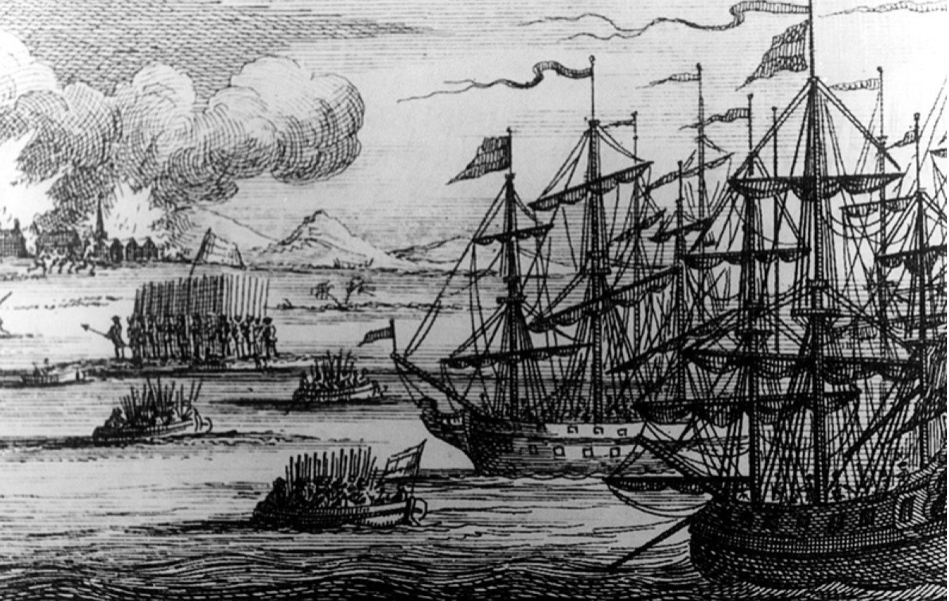
The Dutch were engaged in various wars, such as the Franco Dutch war and the 4 Anglo Dutch wars. During these periods there were many privateers or buccaneers, also known as pirates, roaming the sees between the Caribbean islands. These were seamen and sailors who would attack military and merchant vessels of a specific country with the blessing of another one (privateering). Jan Erasmus Reining, a Dutch buccaneer was one of them. He even served under the more famous Henry Morgan & Rock Brasiliano. Reyning’s visit to Aruba is documented. See it HERE on page 237. He landed on Aruba in 1677, fleeing from St. Maarten after being defeated by French Admiral Duc d’Estrées. His fame stems from the book: The Devils Anarchy; The very remarkable travels of Jan Erasmus Reyning, Buccaneer. Or as the book is called in Dutch: “Zeer aanmerkelijke reysen gedaan door Jan Erasmus Reyning”.
These visits from pirates have also found their way into Aruba’s folklore. I remember my grandmother telling me stories about fishermen seeing ghosts at night. These fishermen would tie up and hide their boats between mangroves or other vegetation on and near the beaches. Legend has it that there have been pirates who buried treasure on Aruba, and cut off the head of one of their crew and buried the body and head with the treasure to guard it. I don’t know if it is true, but I hope that someday someone does find treasure dating back to these years.
Aruba is still Spanish property…..or is it Dutch?
During the 80 years war with Spain, the Dutch captured Curacao, Aruba and Bonaire for their salt pans and strategic positions off the coast of the mainland. This happened without fierce battles or dramatic events. It happened so swiftly and quiet that the Spaniards did not realise they lost the Islands. Proof of this is the fact that it was not until almost 100 years later, that the then Spanish ambassador to the Dutch Republic, Vizconde de Herreria, asked an official status of specifically Aruba. The Dutch replied that they did not understand the fuss. Aruba has been theirs for a long time already. The original letter still exists in the archives of Simancas, Spain.
So the take-away on our Aruba roots here are:
Aruba was property of the WIC and not really part of the Dutch “7 province republic”
The population consisted of Arawak Indians that emigrated from the mainland & a few Europeans employed by the WIC
Aruba was an “experimental” ranch for breeding goats and horses
Aruba was spared much of the violence and battles of the many wars waging in that period
The history of Aruba goes a bit dark after the WIC conquered it from the Spanish. There is not a lot of documentation. Curacao was the main Island housing the senior leadership, Not much happened on Aruba, and I think that it is for this reason, plus the fact that there were no note worthy leaders/commanders on the Island, that not much has been documented. It isn’t till around the 1700’s that we get to find out more again on what actually happened on Aruba. The following is what I have managed to find out. I will update in case I find out more.
Populated by the Caiquetios of the mainland Arawak tribe, deported by the Spaniards and then safe-haven for freed Arawaks from both Hispaniola and the mainland. The evolution of the Aruban population has been turbulent to say the least. At least we know that our first roots are based on the coastal region of what are now Estado Falcon in Venezuela and La Guajira in Colombia. The initial Spanish contacts do not seem to have had a significant impact on the DNA of the early Arubans. They did, however, have a profound cultural influence by introducing Catholicism to them. This will reveal itself to be of some importance later on in the history of Aruba.
In the previous chapter we learned that the arrival of the Dutch was more out of necessity than desire to conquer the Islands from the Spain. And Aruba in this case was less important than the sister Islands of Curacao and Bonaire. Aruba lacked a safe harbour like in Curacao. And it lacked saltpans like in Bonaire. Nevertheless, Aruba was pat of the package, and therefore fought over between the 2 countries.
As part of the 80 year war between Spain and The Netherlands, the WIC was founded. Its main purposes being:
Breaking the monopoly that Spain and Portugal had in the colonisation of the Americas
Colonising part of the Americas for the 7 provinces of The Netherlands
“Piracy” against Spanish merchant vessels to disrupt the supply of wealth to Spain
Disrupt the colonial income to Spain in order to sabotage their war efforts (80 year war)
It was founded in 1621 but started operations in 1623 (remember the 80 year war would go on till 1648). It was not until 1634 that the WIC decided to make a serious attempt to conquer Curacao from the Spaniards. Aruba soon followed in 1636. This was al led by Johannes van Walbeeck. Contrary to popular belief, the Islands became property of the WIC and not colonies of the Netherlands. The WIC even prohibited colonisation by individuals. The Islands became sort of “farms” for the WIC. The local Arawaks were “persuaded” to work while small garrisons of WIC officers and soldiers defended the islands. It was not even allowed for their wives to join them on the Islands. This debunks an important assumption in Aruban history that the Dutch colonised us and that our Dutch Caribbean development or heritage, if you will, started here. Initially the presence of the WIC did not influence the population and cultural much on Aruba. Other that according to some researchers, many Arawaks fled the islands to the mainland due to a preference for Spanish rule.
Octrooi WIC 1621 – The Patent for the WIC in 1621
During all of this the WIC and the 7 provinces of The Netherlands were active elsewhere in the Americas (amongst others):
Recife in Pernambuco, Brazil
Tobago
New Amsterdam (what is now New York)
St Croix
St. Maarten
St. Eustatius
Saba
Aruba in that time fell under Curacao supervision which in turn fell under Supervision of Recife. The highest ranking officer on Aruba was called the Commander. Together with some cavaliers, he had to manage small scale goat farming, which was used to supply Curacao with additional food. It seems that right after being conquered, it took some years before an official Commander has been appointed to Aruba. Apparently the first Commander, Hendrik Martens, was appointed in 1660. Without disrespecting Aruba, it was clear that it had a marginal role at the time.
After the fall of Recife (pernambuco) in 1654 Aruba and its sister islands fell under “New Netherlands” and New Amsterdam (currently NY city). After the British conquest of New Amsterdam, the 3 islands formed a unit of themselves. With Curacao being the lead Island with a Director and Aruba & Bonaire with a commander each.
Dutch WIC siege outside of Olinda, Recife in Pernambuco state.
The take-away on these facts for our history are:
Aruban Arawaks were a mix of original and mainland immigrants
The Spanish had a bigger cultural impact compared to the Dutch on Aruba
Aruba was more an Arawak reservation than a Colony
Aruba was property of the WIC and not of the country of The Netherlands
Last time we checked, Aruba was under Spanish rule, which at the time was the world’s most powerful empire. Aside from occasional pirate or buccaneer raids, there wasn’t much of note happening on the island. According to most historical records, Aruba became part of the Dutch empire around 1636. But before we jump ahead, let’s rewind and explore the events that led to this shift.
The Netherlands, as we know it today, didn’t exist in the early 1600s. During that period, it was part of the Spanish Empire in Europe. We use “they” because what we now call The Netherlands was a collection of regions, or provinces: Holland, Friesland, Groningen, Utrecht, Zeeland, Gelderland, and Overijssel. Around 1568, these regions launched a rebellion, sparking what became known as the Eighty Years’ War. This long conflict ended in 1648, giving rise to a new nation: the Republic of the Netherlands. It’s important to note that the Dutch Kingdom as we know it today hadn’t yet formed; that came later.
During this war, however, a Dutch trading company was established that would forever alter Aruba’s future: the “Verenigde West-Indische Compagnie” (WIC), or Dutch West India Company. One of the main goals of the WIC was to wage war and piracy against Spain in order to weaken its economic power and disrupt its ability to continue fighting. The WIC also aimed to engage in maritime trade and claim its share of the wealth in the Americas. While their initial focus was on Brazil, the Dutch soon expanded into other regions, including the Lesser Antilles—and, of course, Aruba.
One of the primary missions of the Dutch West India Company (WIC) was the search for salt, a crucial ingredient for preserving herring, one of the Netherlands’ most profitable exports. Around 1590, Dutch merchants from the regions of Holland and Zeeland began exploring the Caribbean in search of this “white gold.” One of their main destinations was the coastal area of Punta de Araya, which held vast salt flats. Since the Spanish had minimal defenses in the area, the Dutch were able to harvest salt here for many years without interference.
However, by 1623, the Spanish retaliated, and the Dutch were expelled from Punta de Araya. Today, visitors can still see the remnants of the Spanish fort built to protect the region from further Dutch incursions.
If you scroll and zoom out on the following map, you can see how vast the salt-pans were and still are.
This forced the Dutch to look for alternative locations to harvest salt. This is when they started considering the Islands of Curaçao, Bonaire, St. Maarten and Aruba. Besides salt, the Islands were also of strategic importance for a couple of reasons:
they were excellent bases for piracy against Spanish merchant ships (especially laden with gold and silver)
the Dutch wanted a piece of the Caribbean pie, which was being dominated by the British and the French
We have to remember, the 7 Dutch regions were still at war with Spain, as part of the 80 year war. The Kingdom of The Netherlands still did not exist.
The take-away here is that Aruba became Dutch because of:
the need for salt,
piracy bases
the prestige race of colonising the Caribbean Islands
The war with Spain
Additional sources:
Nederlanders overzee; Leonard Blusse & Jaap de Moor; ISBN 90 6135 361 0
First Forts: Essays on the Archaeology of Proto-colonial Fortifications; edited by Eric Klingelhofer; ISBN 978 90 04 18754 2
After its discovery by Alonso de Ojeda, Aruba became a formal part of the Spanish Empire. While the island did not receive much attention from the Spanish crown, it played an interesting and strategic role in the region. With Coro (modern-day Venezuela) established as a major city and capital of the New World, Aruba saw some activity due to its proximity. However, to fully understand Aruba’s significance during this time, we need to take a broader view of the historical context.
Spanish Rule Over Aruba: A Timeline of Monarchs
From 1499 onward, Aruba was under the rule of several Spanish monarchs, starting with the House of Trastámara:
1499 – 1504: Queen Isabella of Castile and King Ferdinand of Aragon, known for financing Columbus’ expeditions.
1504 – 1555: Queen Juana (often called Juana la Loca).
Following this period, the Spanish throne passed to the House of Habsburg, a powerful dynasty that expanded Spain’s influence through strategic marriages. As of 1556, the Spanish King also held titles over:
Burgundy
The Netherlands (including modern-day Belgium)
Germany
Austria
Rome
Naples (Southern Italy)
And, of course, all Spanish territories in the Americas, including Aruba.
One of the most significant rulers of this period was King Philip II, who reigned from 1556 to 1598. His reign is particularly important for Aruba because the Dutch Protestant Rebellion, which he fought against, would eventually have a profound impact on the island.
King Philip II
The Welser Family’s Control Over Venezuela (1528 – 1546)
Before jumping too far ahead, let’s revisit the events in Coro between 1528 and 1546. During this time, the Spanish crown, heavily indebted due to wars in Europe, transferred control of Venezuela to the Welser family, a powerful German banking dynasty, in exchange for their financial support. From 1528 to 1546, the Welsers governed Venezuela, although their rule didn’t directly affect Aruba in any notable way.
However, this shift in power marked the end of key agreements between the Spaniards and local indigenous leaders. Juan de Ampiés, Cacique Manaure, and Father Bartolomé de las Casas had brokered arrangements that provided some protections for the indigenous population. With the Welsers in control, these agreements fell apart, forcing the indigenous people to fight once again for their rights and survival.
But let’s not jump too far ahead, and go back to Coro around 1528 – 1546. Due to the many wars in Europe the Spanish crown under owed a debt to the German banking family of the Welsers. In exchange for this debt, they got to rule what is now Venezuela from 1528 – 1546. Although their presence did not produce any remarkable activities for Aruba, it did end the agreements between the Spaniards and the local indigenous people. These were agreements made between Juan de Ampies, Cacique Manaure and Father De las Casas. The local indigenous population had to fight again to defend themselves and their right to be there.
Aruba’s Strategic Role in Defending the Coast
Aruba, relatively safe due to its location, played a part in defending the northern coast of Coro from invasions and pirate attacks. In fact, the people of Aruba were actively involved in regional defense efforts, even founding a village northeast of Coro called Carrizal to help protect the area.
The Founding of Carrizal by the People of Aruba: A Historical Mystery
In the Cathedral of Coro (located in modern-day Venezuela), there is a historic document that expresses gratitude to the people of Aruba for founding the village of Carrizal (not to be confused with the present-day municipality of Carrizal in Venezuela). However, the exact circumstances surrounding this event remain somewhat unclear.
It is uncertain whether the Arubans founded Carrizal proactively as a defense against pirate attacks, or if they fled to the mainland to escape these threats. Additionally, the timeline of these events is debated. Some sources suggest that the village was established in the late 16th century, while other documents indicate it may have been around 1723.
Unfortunately, I could not find any visual records to confirm the exact timeline. However, there is a Dutch documentary that discusses this event and even shows the document at minute 6:27. You can also see the church, built around 1750, that still stands today as a testament to this chapter in history.
Key Takeaways from Aruba’s Early Colonial History:
Part of a Global Empire: Aruba was once part of the Spanish Empire, the largest empire in the world during that time, which extended across Europe and the Americas.
Brief German Rule: For a period, Aruba and the surrounding region were managed by the German Welser family, who controlled Venezuela as repayment for debts owed by the Spanish crown.
Lack of Economic Value: Aruba was considered of little economic importance to the Spanish Empire, as the island lacked the gold or other valuable resources that could bolster the royal treasury.
Predominantly Caiquetio Population: Throughout this time, the local population remained largely Caiquetio, with some Spanish settlers coexisting with the native people.
Pirate Raids: The most notable events during this era were the occasional pirate raids, sometimes carried out by famous pirates, adding a layer of excitement to an otherwise quiet colonial existence.
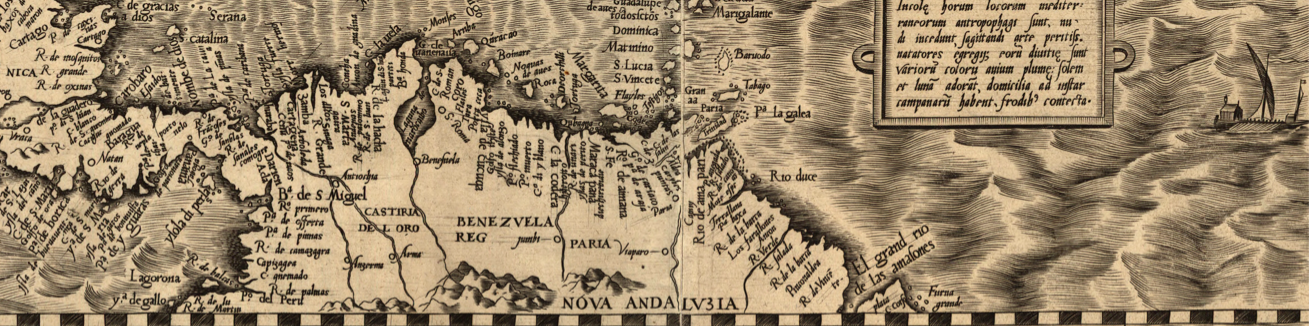
(The map used as featured image on top can is made by Diego Gutierrez and Hieronymus Cock in 1562 and can be found here)
Without a doubt, the first inhabitants of Aruba were the Caiquetio Indians, part of the Arawak tribe who migrated from the mainland and settled on the island. Archaeological excavations have shown that the Caiquetios have lived on Aruba for around 16,000 years, with major settlements in what we now know as Tanki Flip &Malmok (Noord), Santa Cruz, Canashito and Savaneta.
However, as I mentioned in the introduction, my main focus is on Aruba’s history starting in 1499, when everything changed with the arrival of Europeans. The world was transformed after Columbus’ discovery of the Americas, and Aruba was no exception.
Aruba’s first European visitor was a Spaniard named Alonso de Ojeda (1466 Cuenca, Spain – 1515 Santo Domingo, Dominican Republic). Ojeda, a participant in Columbus’ second voyage, later embarked on a separate mission sponsored by Bishop Juan Rodríguez de Fonseca. During this expedition, he explored the coastlines of modern-day Venezuela and Colombia, and in September 1499, he landed on Aruba. Despite this discovery, Ojeda found no gold and labeled Aruba, along with Curaçao and Bonaire, as “Isla Inútil”—Spanish for “worthless island.”
Alonso de Ojeda
Alonso de Ojeda was an interesting character. He embodied, the good, the bad and the ugly of early European exploration in the Americas. But for the continuing history discussed on this site, after the discovery, his relevance diminished. The question I have is: “what happened to Aruba after 1499?”
Aruba automatically became part of the Spanish Empire and was included in the region known as Nueva Andalucía, governed by Ojeda. However, by 1513, the indigenous Caiquetios were enslaved and deported to Hispaniola (modern-day Dominican Republic) to work in copper mines, under the orders of Diego de Salazar. Around 2,000 Caiquetios from Aruba, Bonaire, and Curaçao were taken, leaving Aruba devoid of human inhabitants for nearly six years. Imagine how that must have been.
In 1519, the surviving Caiquetios were allowed to return to Aruba, thanks to Juan Martínez de Ampiés, a Spanish official who recognized the intelligence of the Caiquetios, referring to them as “Guatiaos”. He successfully advocated for their protection from slavery in exchange for their conversion to Christianity. Juan Ampiés, or possibly his son (there’s some historical debate), played a key role in the re-population of Aruba, Bonaire, and Curaçao, and later founded the city of Santa Ana de Coro in Venezuela in 1527 with the help of Cacique Manaure. This city played a key role in the re-population of the Islands, especially Aruba.
Unfortunately, Juan Ampiés eventually lost control of the region due to financial difficulties and disputes. King Charles I of Spain (Charles V of Germany) granted control of Venezuela’s coastal area to the Welser family—German bankers who had financed the Spanish Crown. Juan Ampiés died a poor man in 1533, and although the islands remained under Spanish control, they were largely forgotten, allowing the local Caiquetio population to live with a degree of autonomy.
Juan Ampiés’ influence was significant in shaping the post-1499 history of Aruba. He ensured that the island was re-populated with both the original Caiquetios and new arrivals from the mainland, while also introducing European agricultural practices such as the breeding of goats, pigs, and horses, as well as the cultivation of fruit trees.
Key Takeaways About Aruba’s Roots:
Caiquetio heritage: Aruba’s indigenous roots trace back more than 16,000 years to the Caiquetios.
Spanish colonization: Aruba was colonized by Spain and annexed into Nueva Andalucía.
Enslavement and deportation: In 1513, the Caiquetio population was deported to the Dominican Republic, but later freed and allowed to return.
Cultural exchange: After their return, the Caiquetios were encouraged to convert to Christianity and integrate European agricultural practices, forming the foundation of Aruba’s Catholic heritage.
Mix of populations: By 1499, Aruba’s population had become a mix of original Caiquetio inhabitants, mainland indigenous people (from Santa Ana de Coro), and Spaniards.
ManaureJuan de Ampies
One of my primary conclusions from this chapter, based on extensive research, is that from 1499 onward, Aruba’s population became a blend of Caiquetio natives, indigenous people from the mainland, and Spanish settlers. This also explains the strong Catholic presence in Aruba today. Given the relatively short distance between Aruba and Venezuela (126 km), this cultural exchange makes perfect sense.
In the next chapter, I’ll explore the period from 1533 to around 1600, investigating the events and contributions that further shaped Aruba’s roots.
Note: The Kingdom of the Netherlands did not yet exist during this period. The Dutch provinces of Holland, Friesland, Zeeland, and Utrecht were involved in the Eighty Years’ War against Spain.
Exploring My Passion for History and Aruba’s Roots
A significant part of my free time is dedicated to reading and learning about history. This journey began in elementary school back in Aruba, where we studied the indigenous tribes of the Americas and the colonial period that followed. Over time, my curiosity expanded to include the Greek and Roman Empires, as well as notable military battles throughout history.
Driven by my passion for history and a deep curiosity about my Aruban-Caribbean roots (I am half Caribbean and half European), I started building a private book collection focused on Aruba. My goal is to gather everything I can find related to the island’s history. Today, my collection includes around 20 books, some of which are several decades old. Alongside my book collection, I have also been conducting genealogical research to trace my family’s history.
These two pursuits—book collecting and genealogy—have opened doors to Aruba’s past, shedding light on the island’s rich history. I have realized that much of the history we have been taught is either incomplete or inaccurate. Given the importance of culture in Aruba, I believe we, as Arubans, are still on a journey to define our identity.
By diving deep into the history of Aruba and comparing different accounts, texts, and materials, I’ve uncovered details that help explain the foundations of our roots, heritage, and culture. My aim with this site is to enhance the understanding of what has shaped us as a people and as a nation.
As I continue researching and learning, I’ll regularly update the chapters with new insights and discoveries.
Feel free to contribute any materials you have or correct me where needed (with supporting evidence), and join me in exploring our Aruban roots together!